
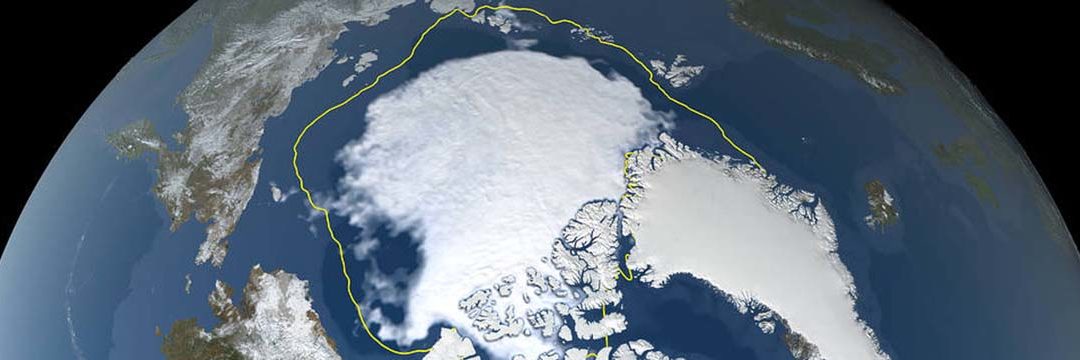
Sea ice in the Arctic appeared to have hit its annual minimum extent on 16 September, after waning in the 2021 Northern Hemisphere spring and summer.
The summertime extent is the 12th-lowest in the satellite record, according to scientists at the NASA-supported National Snow and Ice Data Centre and NASA.
This year, the minimum extent of Arctic sea ice dropped to 4,72-million square kilometres.
Sea ice extent is defined as the total area in which ice concentration is at least 15%.
The average September minimum extent record shows significant declines since satellites began measuring consistently in 1978. The last 15 years (2007 to 2021) are the lowest 15 minimum extents in the 43-year satellite record.
This visualisation, created at NASA’s Goddard Space Flight Centre, shows data provided by the Japan Aerospace Exploration Agency (JAXA), acquired by the Advanced Microwave Scanning Radiometer 2 (AMSR2) instrument aboard JAXA’s Global Change Observation Mission 1st-Water “SHIZUKU” (GCOM-W1) satellite.
Featured picture: A still image visualising Arctic sea ice on 16 September 2021, when the ice appeared to reach its yearly minimum extent. On this date, the extent of the ice was 1,82-million square kilometres.
Credit: NASA’s Scientific Visualisation Studio