Illicit cigarettes constitute more than half of the South African market, according to a new study by researchers at the University of Cape Town’s Research Unit on the Economics of Excisable Products (REEP).
The research, published in Tobacco Control, warns that this crisis poses a severe threat to both public health and government tax revenue.
Using nationally representative data from the 2021 Global Adult Tobacco Survey, the researchers found that approximately 60% of cigarettes sold in South Africa in 2021 were likely illicit.
These findings, along with other research from within the unit, show a massive rise in illicit trade. Even before the 2020 cigarette sales ban due to Covid-19, the illicit market comprised about 30% of the market. The sales ban took the illicit share to about 60% of the total market.
There has been no significant decrease in the illicit market share subsequently.
“The research identifies a substantial structural shift in the South African cigarette market,” says Mxolisi Zondi, the first author of the paper and a researcher at REEP. “In the early years of the 21st century, British American Tobacco (BAT) was the dominant player with more than 90% market share. However, their market share has decreased to only about 33% in 2021. In contrast, Polaris Manufacturing – formerly known as Gold Leaf Tobacco Corporation – has emerged as a major player, with an estimated market share rivalling that of BAT.”
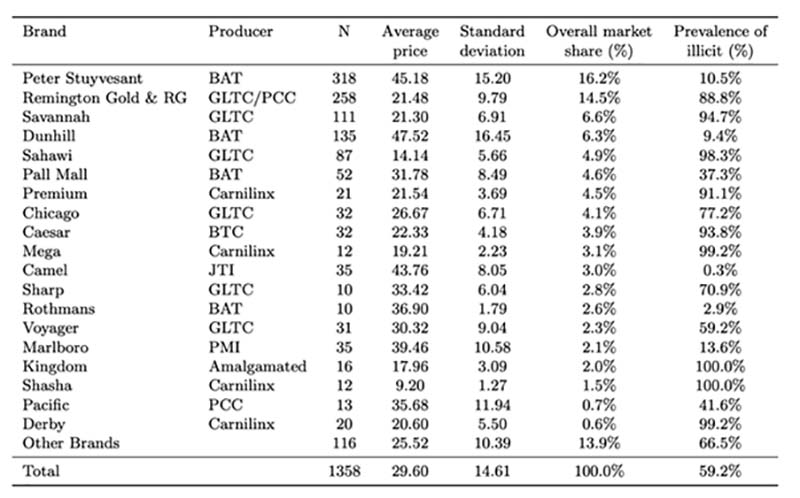
This study is novel in that it identifies specific brands and producers linked to illicit trade (See the summary table below).
The study indicated that for most brands produced by local producers, more than 80% of cigarettes were sold at prices where it was most unlikely that the full tax had been paid. These illicit products were primarily distributed through informal retail channels, especially spaza shops.
The study also highlights important social patterns.
Illicit cigarette use was highest among low-income individuals, people with lower levels of education and heavier smokers, suggesting that cheaper, untaxed cigarettes are disproportionately consumed by more vulnerable groups.
To combat the surge in illicit trade, the South African government must take urgent and decisive steps to secure the national tobacco supply chain. This research, REEP says, provides the government with specific insights into where to target such efforts.