
Transnet will spend more than R129-billion over the next five years to restore the organisation’s sustainability and credibility.
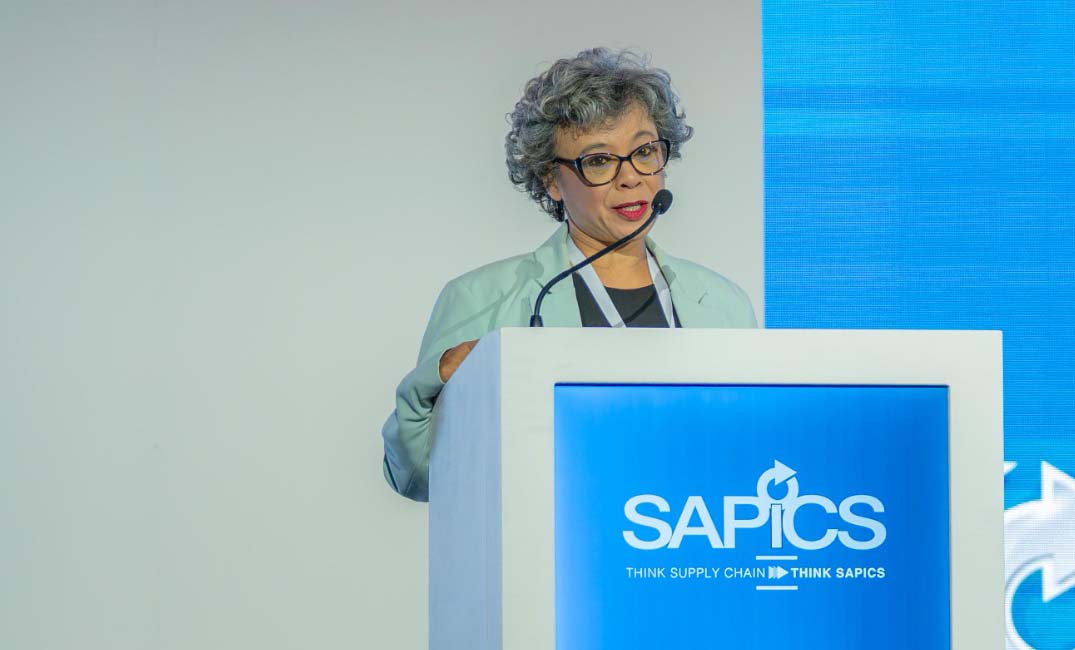
This is the word from group chief executive Michelle Phillips, addressing delegates at the SAPICS Conference in Cape Town.
Phillips told South African supply chain managers impacted by Transnet’s challenges – including severe rail bottlenecks and port inefficiencies – that the organisation’s turnaround plan is working and already delivering tangible results.
The “Reinvent for Growth” (R4G) is taking hold, improving financials and operational discipline, enabling equipment renewal and private sector partnerships that are restoring confidence in Transnet, Phillips said.
R4G has been developed to recover volumes, drive institutional reform and realignment through organisation redesign, and improve Transnet’s commercial focus.
She outlined the three pillars of the R4G programme: “Fix and Optimise”, “Transform” and “Grow” and noted that these are bearing fruit.
Freight rail volumes are stabilising after years of decline. Container volumes are improving across key terminals, reflecting early operational stability. Private sector partnerships are gaining traction. Accelerated port equipment interventions are aimed at improving reliability and lifting overall efficiency.
Reforms and the R4G will support continued volume recovery over the next five years while enabling the market repositioning of Transnet. Transnet Freight Rail volumes are forecast to increase by about 4,7% between the current and financial year and next.
She discussed procurement reform and outlined how the SOE is addressing long-standing structural inefficiencies and repositioning procurement as a strategic enabler.
To build a modern, strategic procurement function, Transnet is focusing on key procurement reforms, namely: a centre-led procurement operating model, digital procurement transformation, supply chain management governance, supplier relationship management and inclusive growth.
Phillips said that measurable outcomes include a 50% reduction in irregular expenditure, a 75% reduction in procurement turnaround, a 78% cycle-time cut via process redesign, more than 10% in cost savings through strategic sourcing, and realised value and savings of more than R2-billion.
Procurement has been transformed from a transactional support function into a strategic value engine that supports business recovery, operational excellence, and sustainable growth, she stated.