
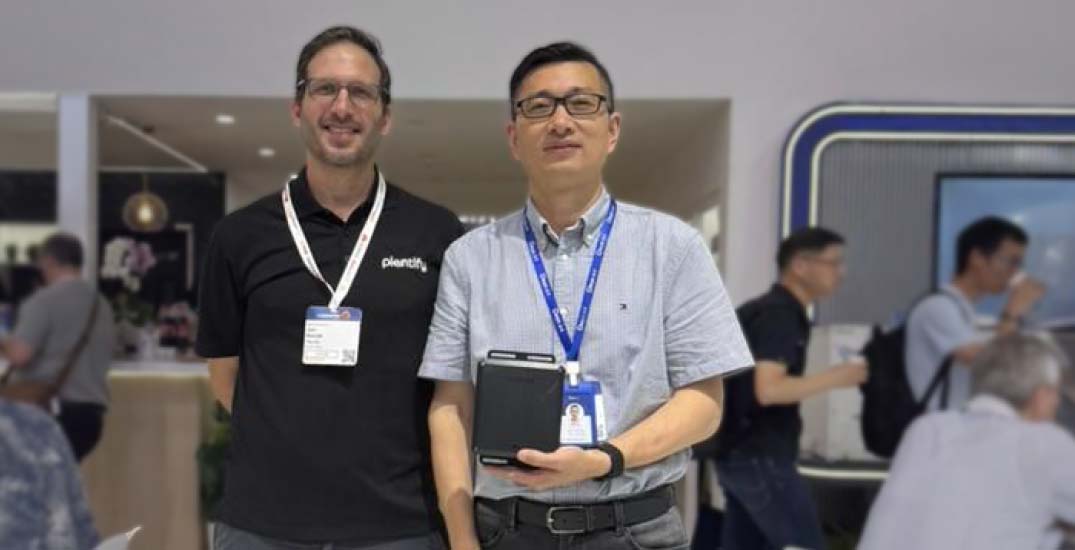
South African energy technology company Plentify has been appointed the exclusive virtual power plant (VPP) partner for Deye in South Africa.
The partnership will enable more than 160 000 Deye residential batteries already installed across South Africa to be intelligently coordinated through Plentify’s Virtual Power Plant platform, creating an aggregated distributed energy resource with approximately 2,7GWh of controllable capacity.
Colin Chang, Deye cloud director, comments: “South Africa holds an irreplaceable core strategic position in Deye’s global layout. Its unique market characteristics and transformative potential make it a key benchmark market for Deye’s business innovation and expansion across emerging economies. Over the past five years, we’ve built one of the country’s largest residential energy storage footprints, creating the scale needed to support a national Virtual Power Plant.
“We’ve successfully deployed Virtual Power Plant programmes in mature energy markets, including Australia and France. Those deployments have given us valuable operational experience in orchestrating distributed residential batteries at scale, and we’re excited to bring those learnings to South Africa through our partnership with Plentify.
“Our experience has shown that success depends on combining proven global technology with deep local market expertise. As a recognised leader in residential VPPs in South Africa, Plentify’s understanding of the local energy system, its proven work with utilities and municipalities, and its residential VPP capability made it the natural partner to help unlock the full value of our installed base.”
Jon Kornik, CEO and co-founder of Plentify, notes: “South Africa’s energy transition has been unique, driven largely by extreme load shedding. The result of this is that batteries are included with more than 90% of solar systems, a greater proportion than almost anywhere in the world, but are sitting idle for large portions of the day – especially now that load shedding has receded.”
By securely coordinating thousands of distributed batteries as a single Virtual Power Plant, the partnership enables stored energy to be managed more intelligently, helping balance electricity demand, strengthen grid resilience and create additional value for participating homeowners.
National impact and industry significance
As municipalities, utilities and policymakers seek more flexible ways to modernise South Africa’s electricity system, Virtual Power Plants are increasingly recognised internationally as a cost-effective alternative to building new grid infrastructure.
The partnership demonstrates how existing distributed energy resources can be orchestrated to improve grid stability while supporting South Africa’s broader energy transition.
“With approximately 2,7GWh of existing battery capacity, this partnership represents almost twice the capacity of Eskom’s current 1,4GWh Battery Energy Storage Programme – a multi-billion rand, multi-year infrastructure investment. It shows how distributed energy resources can complement traditional infrastructure investments by rapidly unlocking value at scale from assets that are already in place,” explains Kornik.
For municipalities, utilities and the national grid, this means lower electricity costs, a more reliable and responsive grid, a lower carbon content of electricity, greater profitability, and the ability to implement new capacity immediately without construction delays or major infrastructure spending.
Benefits for the homeowner
The partnership has been designed to make participation simple for existing Deye customers.
“For years, South African households invested in Deye solar storage to protect their homes from disruptive power outages. Today’s partnership with Plentify transforms that resilience investment into an asset that can deliver ongoing returns,” says Chang.
“Deye has always stood for household energy independence. Through this Virtual Power Plant ecosystem, that mission is elevated, enabling South African families to use their trusted battery systems not only to keep the lights on during blackouts but also to support national grid stability and earn recurring passive income – with zero compromise on home energy security. We want every Deye customer to understand that their energy storage asset is far more valuable than they once thought.”
The collaboration will also see Deye market Plentify’s HotBot intelligent geyser controller to South African customers, expanding the Virtual Power Plant beyond batteries and creating additional opportunities for household savings and grid flexibility.
Kornik says: “For participating Deye homeowners, this is an important step towards our vision of every Plentified home becoming a net earner from its energy system. Ultimately, the benefits extend well beyond participating households, delivering cheaper, cleaner and more resilient energy for everyone connected to the grid.”
Featured picture: Jon Kornik, CEO of Plentify, and Colin Chang, Deye cloud director, at the recent Intersolar Europe Conference.