
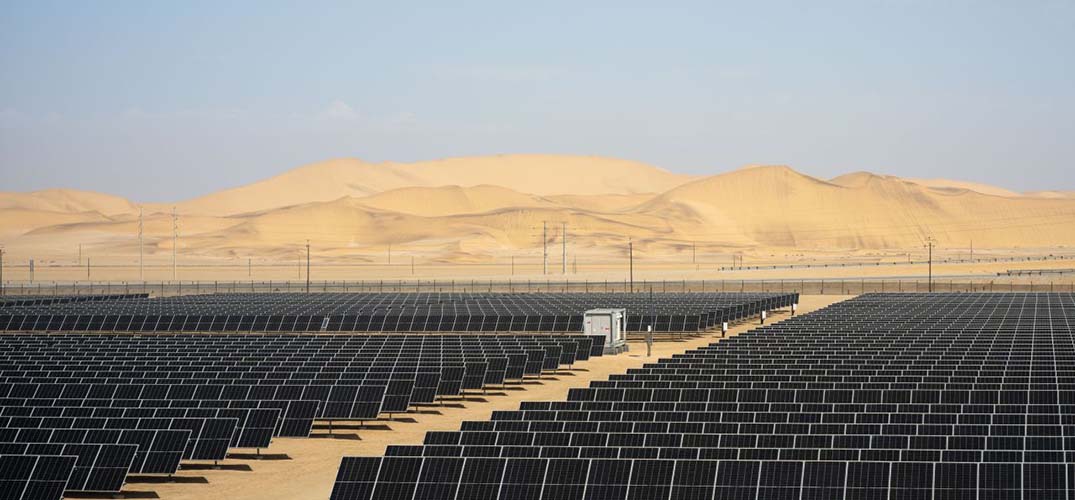
Namibia is demonstrating what is possible in Africa’s energy transition with the continent’s first fully-integrated green hydrogen facility at the CMB.TECH Namibia facility in Walvis Bay.
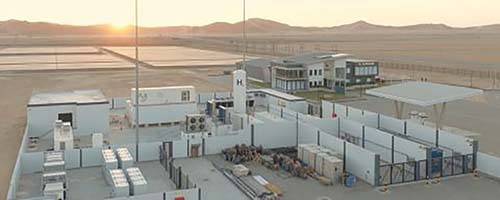 The facility brings together solar power generation, green hydrogen production, and energy storage in a single operational ecosystem demonstrating how clean energy can be produced at industrial scale while supporting industrial decarbonisation and long-term energy resilience.
“Africa’s first fully-integrated green hydrogen facility demonstrates that large-scale clean energy production is not a future ambition, but a present-day reality,” says Sabine Dall’Omo, CEO of Siemens Sub-Saharan Africa. “Operating successfully in one of the world’s most demanding environments, it showcases the viability of green hydrogen as a cornerstone of the continent’s energy transition.”
The hydrogen produced at CMB.TECH will initially power local industrial applications like dual-fuel trucks, generators and Namibia’s first hydrogen-powered freight locomotive. In the future, the plant will expand and integrate more with port infrastructure, transforming maritime decarbonisation by refuelling ships with ammonia from green hydrogen. This will boost Namibia’s renewable energy use and reduce dependence on fossil fuels – especially in the hard-to-decarbonise shipping sector.
As the technology partner underpinning the operation, Siemens provides the integrated electrical, automation, and safety infrastructure that enables seamless coordination across the site, creating a high-availability platform that supports the future of green industrial development.
Namibia is one of the sunniest countries in the world, with about 300 sunny days a year, and solar power can be harnessed in abundance. In Walvis Bay, that solar power drives an electrolyser that splits water into hydrogen and oxygen. To produce marine fuel, the hydrogen will be combined with nitrogen from the air to create ammonia, which is then liquefied.
“In a region where reliable energy is essential for economic growth and social development, what matters most is a system that simply works,” says Dall’Omo. “The CMB.TECH plant can only deliver on its promise if all technologies operate seamlessly as one. That is where Siemens makes the decisive difference. Working as a ONE tech company and serving as the unified interface for automation, control, and power distribution, we ensure the facility runs reliably from day one.
“Our long presence in the region, deep understanding of local conditions, and close collaboration across our businesses help reduce complexity, solve issues quickly, and keep operations stable,” Dall’Omo adds. “In short, we bring the entire system to life, enabling the plant to become a dependable, future-shaping asset for the customer and the wider community.”
CMB.TECH is a “Living Lab” for an integrated hydrogen economy.
“The facility includes a solar-powered off-grid electrolyser for renewable hydrogen production, a refuelling station for hydrogen-powered vehicles and industrial applications, and an on-site Hydrogen Academy for local talent development,” says Roy Campe, chief technology officer of CMB.TECH.
The plant’s 5MWp solar park covers 6,5 hectares and feeds a hydrogen production facility with a 5-megawatt Proton Exchange Membrane electrolyser and a 5,9-megawatt-hour battery. The fully off-grid electrolyser produces green hydrogen using electricity from the solar park and energy stored in the Battery Energy Storage System (BESS).
CMB.TECH built the facility and is using the green hydrogen for its local industrial applications, making the company its own first customer and ensuring a guaranteed buyer from day one.
“Many green hydrogen projects are stalling because, while they invest heavily in solar energy and green hydrogen production – there is often no commercial offtake agreement in place to secure demand for the hydrogen produced,” says Dall’Omo.
“Beyond its role as an energy production facility, the project illustrates how green hydrogen can accelerate the decarbonisation of transport and logistics value chains. From supporting local mobility solutions to enabling future maritime refuelling infrastructure, it provides a tangible pathway toward lower-carbon industrial and shipping ecosystems,” says Wiebke Polomka, senior manager: southern Africa, Afrika-Verein der deutschen Wirtschaft.
The current 5MWp solar park occupies only a fraction of the available land.
“The next step is to increase capacity to 250 megawatts, then to 500,” says Campe. “We want to turn Namibia into a global energy hub and export energy to Europe and the rest of the world. Today we have 7 000 solar panels. In the future, there could be millions.”