
Kathy Gibson reports from Cape Town – Eskom’s turnaround has seen the entity move from failing to provide basic services to citizens to becoming a strategic producer of power for Africa’s data centre growth.
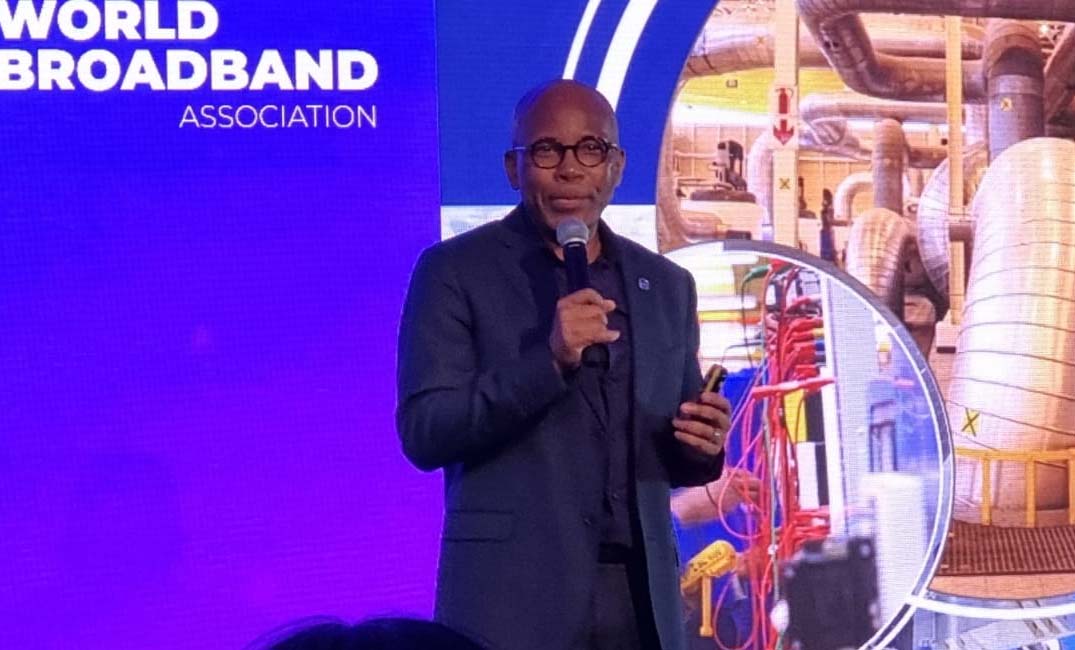
Dr Mteto Nyati, chairman of Eskom, tells the WBBA Broadband Development Congress Africa 2026 that the organisation is helping to position South Africa as the gateway to Africa’s data centre investment.
“We feel that, with the level of power and size of Eskom, we can position South Africa and southern Africa as a location for data centres,” he says.
The world of today is very different from a few years ago, he adds. There is higher geopolitical instability, new choke points, the erosion of the rules-based global order and more government intervention in business.
“As a country and a region we need to think deeply about our interests and how we can position ourselves and make sure not caught out,” he says.
This means becoming self-sufficient and Nyati believes we can do this while growing data centre capacity.
The opportunity is there. “We could grow Africa’s data centre power demand by 2030,” Nyati says.
South Africa should retain its position as the gateway to Africa. “Today, 70% of Africa’s live data centre capacity is in South Africa, which is the continent’s hyperscaler hub,” Nyati says. “And these data centres will be increasing.”
As the largest electricity producer in Africa, Eskom has 31 power stions in South Africa and a capacity of 48GW capacity. “We have come from being unable to provide electricity to being the energy powerhouse of Africa,” Nyati says.
Partnering will be key, with end-to-end co-operating from the grid connection to government, he adds. Eskom also aims to work with other countries to provide the energy needed to drive their own economies.
“We see data centres as a great opportunity for Africa,” Nyati says.
“South Africa’s infrastructure, capability and market access make it an ideal data centre location and gateway to the continent. We have the available capacity; we have the fibre and connectivity; and we have a deep skills base.”
What’s needed now is to create a co-ordinated national approvals pathway to unlock faster and more predictable time to power, Nyati explains.
Government and the private sector need to align processes, enable parallel approvals, set service timelines and provide a single escalation route.
“And governments need to provide clear and consistent policy guidelines for regulatory certainty on long-term cross border operations.”
Nyati says Eskom is sending a clear message: “As a company we are very passionate and focused on powering data centres not just for our country but for southern Africa. In partnership with government we aim to ensure we continue to be self-reliant, able drive own future without being too dependent on others.
“Energy must be secure, available, affordable and sustainable.”