
Kathy Gibson reports from Cape Town – Africa must aim for meaningful connectivity that enables and empowers people across the continent.
That is the headline topic at the GSMA Digital Summit Africa taking place in Cape Town today.
Angela Wamola, head of GSMA, says: “It is not just about connecting village, but being able to transform people’s livelihoods, to use connectivity as an enabler so everyone rises.”
In Africa, there is a big usage gap, she says, highlighted by the 991-million people who are covered by a broadband signal but are still offline. “And that number keeps rising. If we do nothing, it will be 1-billion by next year.
Even more worrying, 695-million – 70% of them – do not have a mobile broadband device. But that means the 30% – 297-million – who do have a broadband-ready device are not going online.
“So it has never had any value in their life,” Wamola says.
This also means that we can’t address just the cost of the device, but need to look at the other factors keeping people offline.
But Wamola stresses that just because people are not online doesn’t mean they are not using service: while 28% of Africa’s population is connected to the mobile Internet, 42% have used mobile money – aften via USSD.
The usage gap has a face, she adds: it is rural, female and low income – and typically underserved.
To address the gap and enable regular and meaningful usage, Wamola points out that coverage is just the start. We also need to bring them affordable device, skills and literacy, local language access and relevant services.
We need to consider the whole of the economy and how to digitalise it. “People want to see outcomes that are relevant to them in fields like agriculture, health, education, transport, manufacturing, finance and government.
“We need to try to digitalise and support the whole value chain so we can see adoption and impact.”
Both sides of he equation need to get equal weight, Wamola adds. “As we connect we must adopt services. We must see the demand side of the coin at the same time as we see the supply side.”
A big question to answer is whether we are providing the same resiliency for the underserved people?
“To have resilience, spectrum is an enabler,” Wamola says. “It requires the same investment and decision-making in the underserved areas. You can’t provide just a best effort experience. That doesn’t encourage the services you want.”
Other barriers include the fact that 70% of Africa’s people can’t afford a smartphone device. And if they do have access they can’t speak to it because services are not in their own language.
“This is because we have traditionally been consumers not contributors – if people create relevant services themselves, it would likely be in their own language.”
Typically, digital adoption in Africa has been by individual, but has been constrained in businesses, Wamola adds. “Digital business is a very low-hanging fruit.”
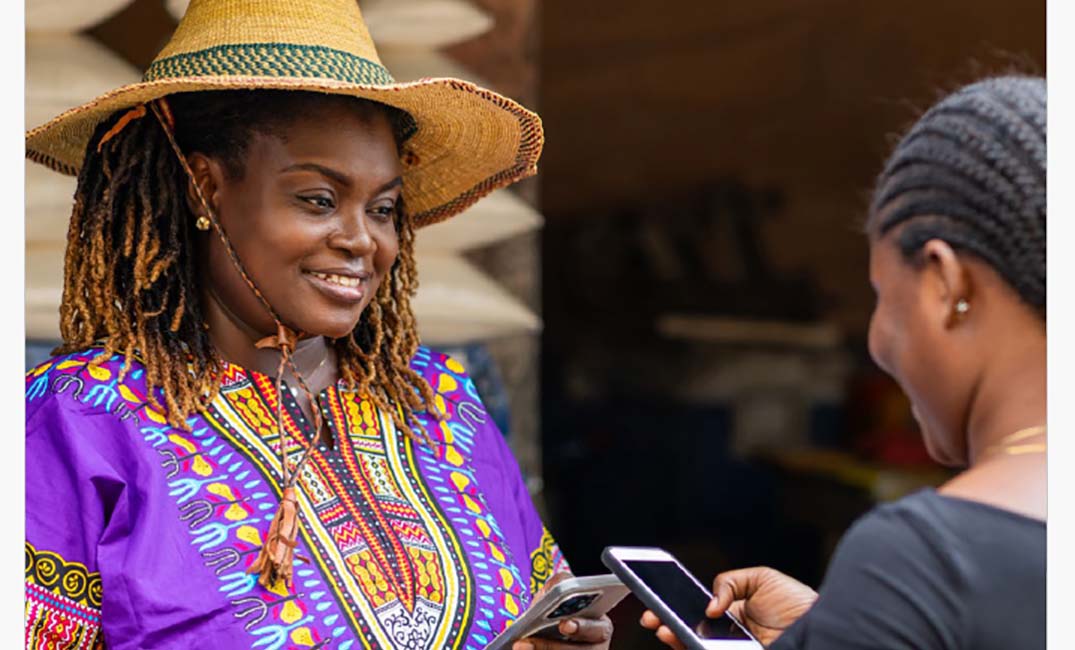
The featured picture is from the cover of the Digital Africa Index 2026 publisehd by the GSMA