
As artificial intelligence (AI) becomes mainstream, the technology is starting to play a key role in the operation and maintenance of the core networks that keep the world’s telco companies up and running.
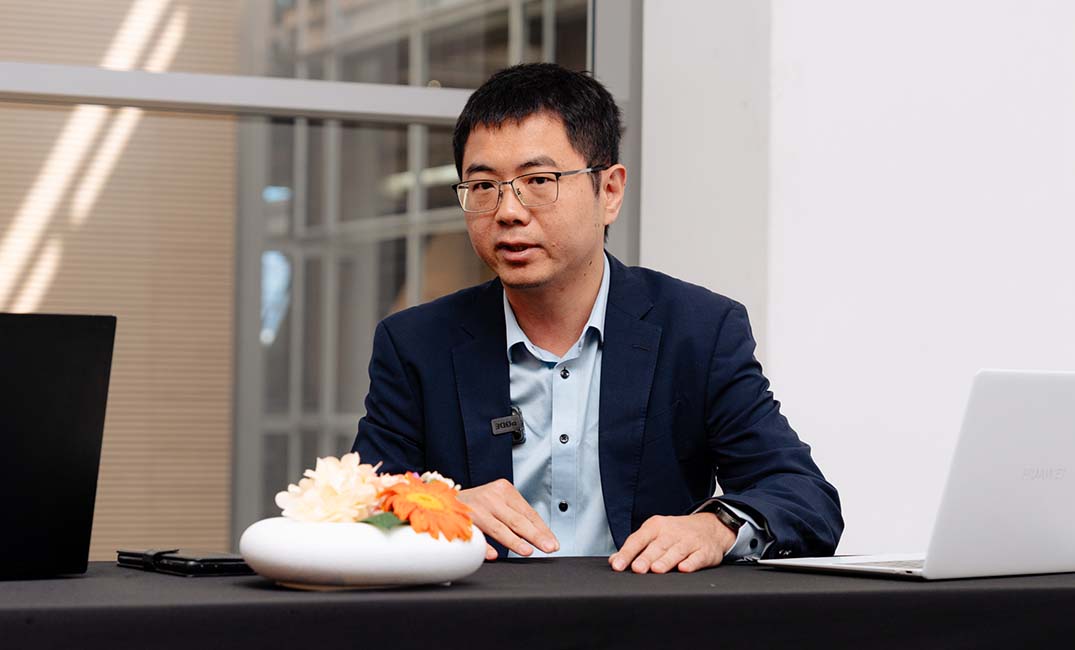
IT-Online editor Kathy Gibson met up with Colin Gao, vice-president of the Cloud Core Network product line at Huawei, to better understand how the intelligent autonomic network (AN) is driving a new era in access quality.
Typically, network operations and maintenance has been a major challenge for telcos, with faults hard to find and fix. And this, in turn, has negative implications for network uptime, availability and latency.
Gao points out that the core network, as the brain of the entire system, is complex. Technology advances have increased the scope and performance of the core network and, also increased both the risk and the impact of outages.
This means there is immense pressure on operations teams, with highly skilled engineers needed to prevent downtime or performance lags.
“For the core network engineer, the work is very hard and puts him under more pressure than any other domain,” Gao says.
For engineers in this environment, the training cycle is long, and the work depends heavily on accumulated experience.
At the same time, the core network is managed at a massive scale, so reliability requirements high – and when a problem occurs, its impact is widely felt.
“We have seen many examples of emergencies resulting from networks going down,” Gao points out.
Such incidents are compounded by challenging operating environments, including unstable power supply in some parts of Southern Africa, which impose even higher requirements on network resilience.
In order to maintain a five-nines level of stable access, it’s important to make operations efficient, so that the network is more resilient and more intelligent.
AI in the core network
In the intelligent network, AI operates in two complementary roles: the network provides the infrastructure to support AI services, while AI orchestrates and stabilises network operations.
Gao says AI is starting to reshape the system and the operating processes.
“I think AI can reshape the traditional operations and maintenance process, bringing highly autonomic networks from concept to reality,” he says.
Huawei has been investing in AI innovation in core network operations and maintenance on four fronts.
The first is intent. AI turns what a person asks for into action — natural interaction, task orchestration, and automatic invocation and execution of tools.
The second is awareness, where AI picks out subtle changes inside massive amounts of data, flags them early, and acts before they become incidents.
With intent and awareness established, AI can then move on to the third step, which is analysis. “AI can correlate multiple data sources and analytical methods to diagnose issues precisely,” Gao says. “It can go beyond the symptoms to find the root cause of any issue. And it can put forward recommends to fix them.”
The final pillar of the AN is decision and execution. This is where AI validates decisions against a digital twin before it touches the live network. “This means that execution, when it happens live, is accurate, the issue is resolved, and KPIs (key performance indicators) return to target,” Gao explains.
Intelligence that spans the network
The level of autonomy varies across the network, across the parameters of service intelligence, network intelligence, and O&M intelligence.
Service intelligence allows the network to adapt according to the type of communication medium being used. This could be voice, data or multimedia, with the AI agent helping the consumer to use the best possible service.
Network intelligence ensures that network quality is consistent, offering an assured experience to the user.
O&M intelligence refers to the autonomic network, where operations like fault handling, service assurance and monitoring are handled automatically, intelligently and efficiently.
Gao explains that Huawei, which has been working on this technology for eight years, has achieved AN level 4.
Vision for the future
The pace of change is not slowing down. Huawei continues to evolve the technology, with the aim of making core network fault handling completely automatic.
“The vision of AN is to achieve single-domain autonomy, helping operators build a core network with ultimate stability and ultimate efficiency,” Gao explains.
For fault-handling scenarios, when there are alarms, the system will automatically trigger a closed loop of perception–analysis–decision–execution automation.
When it comes to service assurance, the network will recognise if KPIs degrade noticeably and will intelligently switch to available paths so users are not impacted. At the same time, it will quickly – and autonomically – restore services within minutes and switch workloads back.
In network change scenarios, it will automatically generate and validate configurations based on service intent, which will result in accelerated time to market for services.
“In our level 4 core network we can generate and test the configuration automatically,” Gao says. “It is tested in the digital twin network and, if the test is successful, can be automatically executed in the real network – with no human intervention.”
These intelligent services result in an accelerated time to market, with the added assurance that all the steps and processes are automatic.
“So right now, AI is helping the human,” Gao concludes. “But maybe in a few years’ time, it will be able to run the system without any humans.”
Intelligent core network in action
Huawei’s 5G-A Intelligent Core enhances connection capabilities, leverages service intelligence, network intelligence, and O&M intelligence.
The system is deployed by the on of the world’s largest telecom operators, China Mobile.
In addition, a number of African telcos have also started their intelligent core network journey with Huawei.
Featured picture: Colin Gao, vice-president of the Cloud Core Network product line at Huawei