
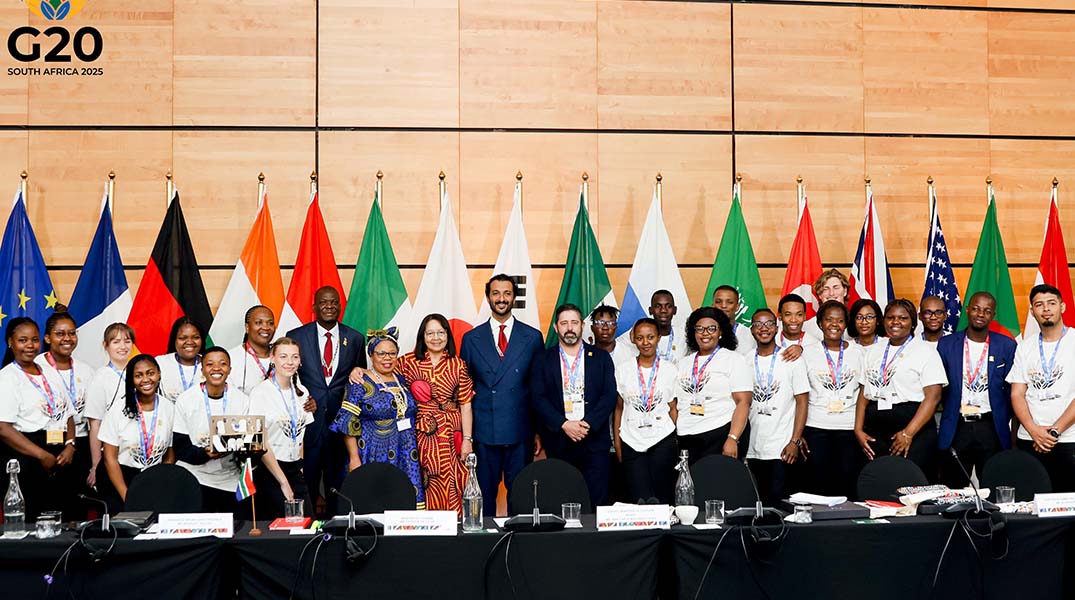
When the G20 Tourism Hackathon challenged South Africa’s brightest young minds to “hack” the future of tourism, a diverse team of students from across the country rose to the occasion.
The G20 Tourism Hackathon aimed to unite government, business and academia; showcasing the creativity and ingenuity of South Africa’s youth; and helping to pave the way for a tech-driven, people-centred tourism sector.
The Catalysts won first place with The Hologram Hub, a project designed to empower rural communities, preserve cultural heritage, and create a more inclusive tourism landscape through technology.
The hackathon convened in Mpumalanga for its final stage, challenging teams to solve visitor arrival confidence, accessibility, and inclusive growth.
“We identified the gaps within our tourism sector, which is the informal trade sector. Those people are sidelined too much,” explains Morongwa Manamela, a 25-year-old team member from the University of Pretoria. “We believe that with the support of a digital platform, we can make them visible.”
Their solution, The Hologram Hub, is a concept that blends physical and digital experiences. The team envisions a double-story community hub where the ground floor serves as a vibrant marketplace for local artisans to showcase and sell their crafts.
The top floor houses a hologram centre where tourists can interact with lifelike projections of historical figures, such as Nelson Mandela or Shaka Zulu. These holograms will share their stories, and a QR code will then guide visitors to related real-world attractions, boosting traffic to local museums and heritage sites.
The project is powered by an app that uses augmented reality to enrich the tourist experience.
Morongwa explains: “Through our app, tourists can know the products that they are buying and how it has been sourced and made. We are promoting our culture. This feature allows tourists to understand the meaning behind beadwork colours or the origin of a craft name, transforming a simple transaction into a genuine cultural exchange.”
The Catalysts comprises seven students from seven different institutions: Teagon Spykerman (University of Johannesburg), Morongwa Manamela (University of Pretoria), Zinhle Methula (Durban University of Technology), Innocentia Bongiwe Nkosi (University of Mpumalanga), Matshidiso Ralekholela (The Independent Institute of Education), Tebogo Selepe (Vaal University of Technology), and Khanyisa Mokgolobotho (Sefako Makgatho Health Services University).
The journey was not without challenges. Collaborating online from different universities and balancing studies required immense dedication. The final event in Mpumalanga was an intense, four-day pressure cooker.
“Honestly, it was game-changing,” says 20-year-old Spykerman. “I’ve never really been put under that kind of pressure before. It broadened my perspective on teamwork and helped me see how important it is in the industry.”
With the R175 000 prize money, The Catalysts are already planning their next steps. Their priorities include patenting their concept, registering their business, and further developing their web application. Their long-term vision is to pilot the first Hologram Hub in KwaZulu-Natal and eventually help establish “smart rural cities” that spotlight black-owned and community-based businesses.