
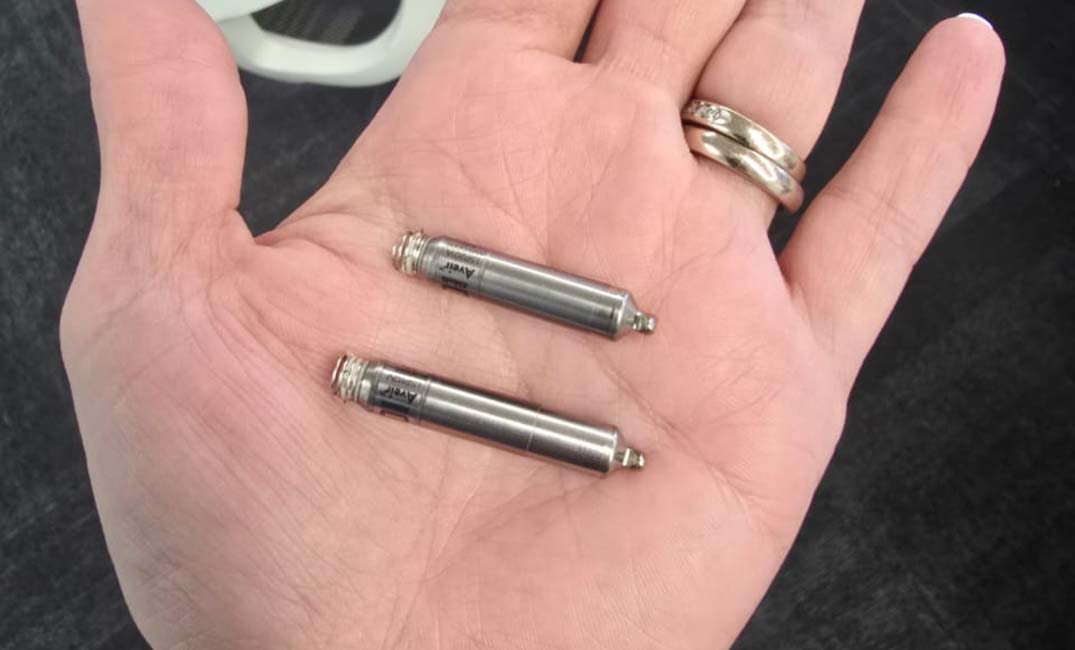
A tiny leadless pacemaker, a fraction of the size of a AAA battery, has been successfully implanted in the chamber of a patient’s heart in a minimally invasive procedure at Netcare Unitas Hospital.
Cardiologist Dr Jean Vorster and electrophysiologist Dr Jane Moses performed South Africa’s first implant of an AVEIR VR Leadless Pacemaker (LP) in late November, marking a milestone in next generation treatment for heart rhythm disorders.
“Although pacemakers have become smaller with longer battery life over the past two to three decades, there has been little advancement in the therapy,” says Dr Vorster.
“This latest iteration of pacemaker technology not only eliminates the need for leads, which are usually implanted through the veins leading to the heart, but there is also the aesthetic advantage that the patient is no longer left with a bulge in their chest as a constant reminder of their condition, because this LP is so small and the minimally invasive direct implant means there is no need for a surgical scar on the chest at all.
“The AVEIR VR LP is also unique in the considerable advancement in the algorithms and programming of the device,” he says.
Electrophysiologist Dr Jane Moses adds: “This pacemaker is small enough to fit comfortably within the lower right ventricle of the heart, and while this single chamber device is good news in itself for the treatment of heart rhythm disorders, the major significance of this technology lies in the possibilities it presents for further breakthroughs in the near future.”
With longer battery life packed into the tiny device measuring just 38mm and only a third of the volume of a standard AAA battery, this flagship VR LP is designed to attach securely to the wall of the heart. The LP is positioned, and retrieved if necessary, using a long, slender catheter system carefully guided to the heart via the femoral vein in the patient’s groin.
The system’s capabilities include mapping before placement to enhance precision. The AVEIR VR LP is equipped to measure the electrical impulses of the ventricles, impedance and an initial capture threshold before it is secured in position by attaching the LP’s tip electrode to the heart muscle. Once contact is confirmed, the instrument gently rotates the LP to embed it into the muscular inner wall of the heart’s lower chamber.
Immediate advantages of the newer leadless pacemakers for patients include that they eliminate the risks associated with leads degrading or fracturing, as well as the need for more frequent reintervention. There is also less risk of infection without the need for an open surgical wound with the minimally invasive LP placement.
Dr Vorster concludes: “Eliminating leads is really a game-changer in pacemaker technology. In Europe, some patients can return home on the day of the procedure, reducing the need for hospital recovery. Cardiac microtechnology and the prospect of dual chamber devices are no longer science fiction; they are scientific fact.”