
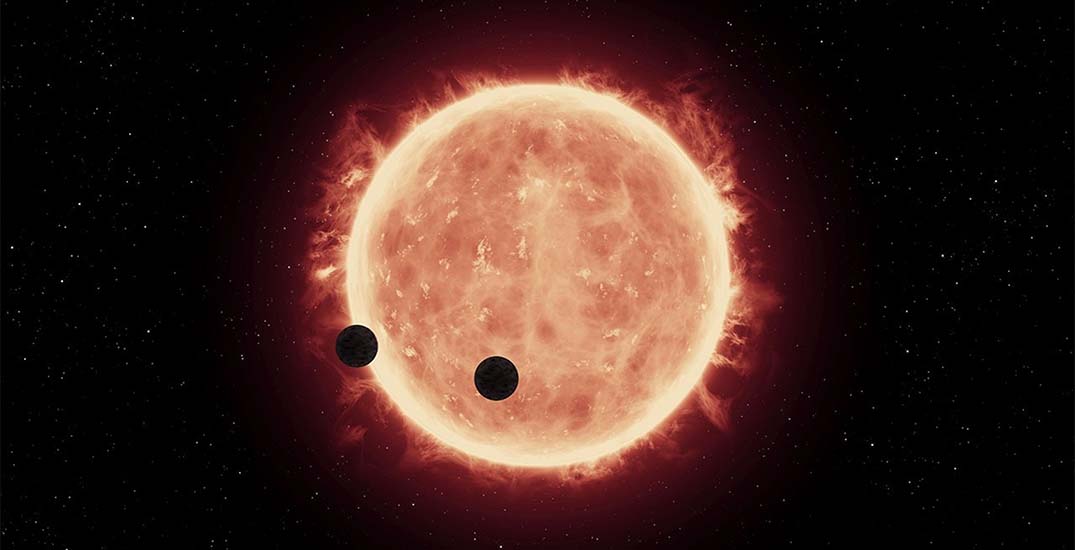
Scientists have discovered more than 6 000 planets that orbit stars other than our Sun, known as exoplanets. More than half of these planets were discovered thanks to data from NASA’s retired Kepler mission and NASA’s current TESS (Transiting Exoplanet Survey Satellite) mission.
However, the enormous treasure trove of data from these missions still contains many yet-to-be-discovered planets. All of the data from both missions is publicly available in NASA archives, and many teams around the world have used that data to find new planets using a number of techniques.
In 2021, a team from NASA’s Ames Research Centre created ExoMiner, a piece of open-source software that used artificial intelligence (AI) to validate 370 new exoplanets from Kepler data. Now, the team has created a new version of the model trained on both Kepler and TESS data, called ExoMiner++.
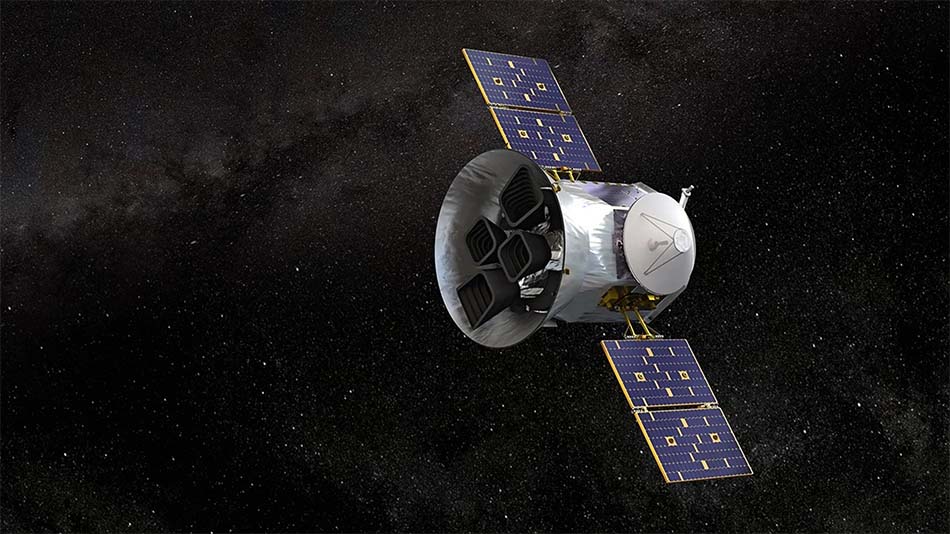
Artist’s impression of NASA’s Transiting Exoplanet Survey Satellite (TESS), which launched in 2018 and has discovered nearly 700 exoplanets so far. NASA’s ExoMiner++ software is working toward identifying more planets in TESS data using artificial intelligence.
NASA’s Goddard Space Flight Centre
The new algorithm, which is discussed in a recent paper published in the Astronomical Journal, identified 7,000 targets as exoplanet candidates from TESS on an initial run. An exoplanet candidate is a signal that is likely to be a planet but requires follow-up observations from additional telescopes to confirm.
ExoMiner++ can be freely downloaded from GitHub, allowing any researcher to use the tool to hunt for planets in TESS’s growing public data archive.
“Open-source software like ExoMiner accelerates scientific discovery,” says Kevin Murphy, NASA’s chief science data officer. “When researchers freely share the tools they’ve developed, it lets others replicate the results and dig deeper into the data, which is why open data and code are important pillars of gold-standard science.”
ExoMiner++ sifts through observations of possible transits to predict which ones are caused by exoplanets and which ones are caused by other astronomical events, such as eclipsing binary stars.
“When you have hundreds of thousands of signals, like in this case, it’s the ideal place to deploy these deep learning technologies,” says Miguel Martinho, a KBR employee at NASA Ames who serves as the co-investigator for ExoMiner++.
Kepler and TESS operate differently: TESS is surveying nearly the whole sky, mainly looking for planets transiting nearby stars; while Kepler looked at a small patch of sky more deeply than TESS.
Despite these different observing strategies, the two missions produce compatible datasets, allowing ExoMiner++ to train on data from both telescopes and deliver strong results.
“With not many resources, we can make a lot of returns,” says Hamed Valizadegan, the project lead for ExoMiner and a KBR employee at NASA Ames.
The next version of ExoMiner++ will improve the usefulness of the model and inform future exoplanet detection efforts. While ExoMiner++ can currently flag planet candidates when given a list of possible transit signals, the team is also working on giving the model the ability to identify the signals themselves from the raw data.
Open-source science and open-source software are why the exoplanet field is advancing as quickly as it is.
In addition to the ongoing stream of data from TESS, future exoplanet-hunting missions will give ExoMiner users plenty more data to work with. NASA’s upcoming Nancy Grace Roman Space Telescope will capture tens of thousands of exoplanet transits – and, like TESS data, Roman data will be freely available in line with NASA’s commitment to Gold Standard Science and sharing data with the public. The advances made with the ExoMiner models could help hunt for exoplanets in Roman data, too.
“The open science initiative out of NASA is going to lead to not just better science, but also better software,” says Jon Jenkins, an exoplanet scientist at NASA Ames. “Open-source science and open-source software are why the exoplanet field is advancing as quickly as it is.”
Featured picture: This artist’s impression shows the star TRAPPIST-1 with two planets transiting across it. ExoMiner++, a recently updated open-source software package developed by NASA, uses artificial intelligence to help find new transiting exoplanets in data collected by NASA’s missions.
NASA, ESA, and G. Bacon (STScI)