
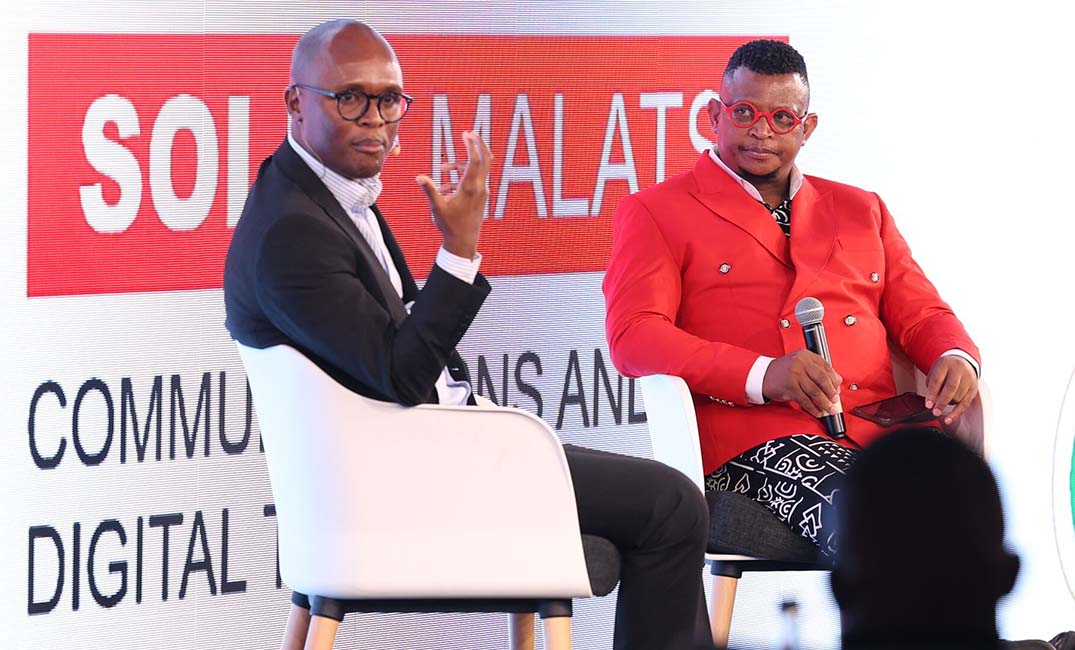
The fourth annual Social Media Summit for Government (the Summit) concluded at the University of Johannesburg Business School (JBS) with a strong consensus: unless artificial intelligence is deliberately harnessed to include citizens the government currently cannot hear, and unless public services become easier to access only for citizens who are already connected, digitally confident and able to afford data, South Africa’s digital transformation will fail to fulfil its democratic promise.
Convened by Decode in partnership with JBS and endorsed by the Public Relations Institute of Southern Africa (PRISA), the two-day Summit, held from 8 to 9 July, brought together public sector leaders, communicators, policymakers, academics, technologists, journalists and content creators under the theme “Reimagining Citizen Engagement through Human Intelligence + Artificial Intelligence.”
The theme was chosen to confront two challenges now converging in government and public-sector communication. The first is a digital divide hardening into a democratic divide: as public services and public information migrate online, citizens without affordable data, capable devices or meaningful connectivity are not merely inconvenienced – they are excluded from the information, services and participation on which democratic citizenship depends. The second is a deepening trust deficit: synthetic media, misinformation and manipulated content now move faster than credible public information and often reach excluded communities first.
It was these two fault lines that minister of communications and digital technologies Solly Malatsi addressed directly in the Summit’s keynote. “A promise made only to the connected is not a promise to the nation,” the Minister told delegates. “If the digital state works beautifully for those with good smartphones, affordable data, high literacy, strong connectivity, English fluency and confidence online, then we have not built a digital state. We have built a premium service layer for the already included.”
Malatsi opened by drawing attention to “the intelligence we fail to gather when a citizen cannot get online to be heard”, the young person who cannot afford data to search for an opportunity, the small business owner who receives public information too late to act, and the citizen “spoken about in dashboards, reports and analytics” but never meaningfully connected. “You cannot listen to a citizen you have not connected to. And you cannot serve a citizen you cannot hear,” he said.
He warned that moving public services onto digital channels without closing the divide would not democratise the state: “Digital-first quietly becomes digital-only.” On artificial intelligence, he cautioned that “human intelligence plus artificial intelligence cannot mean simply using AI to automate the old habits of government. We cannot simply digitise inefficiency.”
In a pointed message to technology platforms, the Minister called for robust self-regulation that is responsive to South Africa’s constitutional values, languages and social realities, with a clear caveat. “Partnership cannot mean that government carries the public-interest burden while platforms carry only the commercial upside,” he said. “We will regulate where necessary. But we would much rather see platforms take responsibility before regulation becomes unavoidable.”
Lorato Tshenkeng, founder and CEO of Decode., said the Minister’s address captured the Summit’s purpose. “For four years, this Summit has argued that government communication is not decoration after a decision has been made; it is infrastructure. It is how a democratic state listens, explains, accounts for and adapts. The measure of a digital state is not its dashboards. It is whether it reaches the citizen who has been excluded, unheard or priced out. That is the power shift this theme demands: from broadcasting to citizens to building trust with them, with AI as an instrument of inclusion rather than a faster way to leave people behind.”
Tshenkeng also acknowledged PRISA’s stewardship of the profession: “As the industry’s professional body, PRISA plays a vital role in advancing ethical standards for the use of artificial intelligence, upholding professional excellence, and ensuring that communicators are at the forefront of responsible, human-centred adoption of AI, thereby safeguarding trust and enabling innovation.”
PRISA president Dr Caroline Azionya told delegates that as synthetic media, smear campaigns and digital manipulation increasingly shape public discourse, communicators face mounting pressure to safeguard their credibility. Against a backdrop of overlapping geopolitical crises and declining citizen confidence, he argued, the profession has a critical role in fostering transparency, countering misinformation and rebuilding trust through ethical, authentic engagement.
Featured picture: Minister of communications and digital technologies Solly Malatsi and Lorato Tshenkeng, founder and CEO of Decode.