
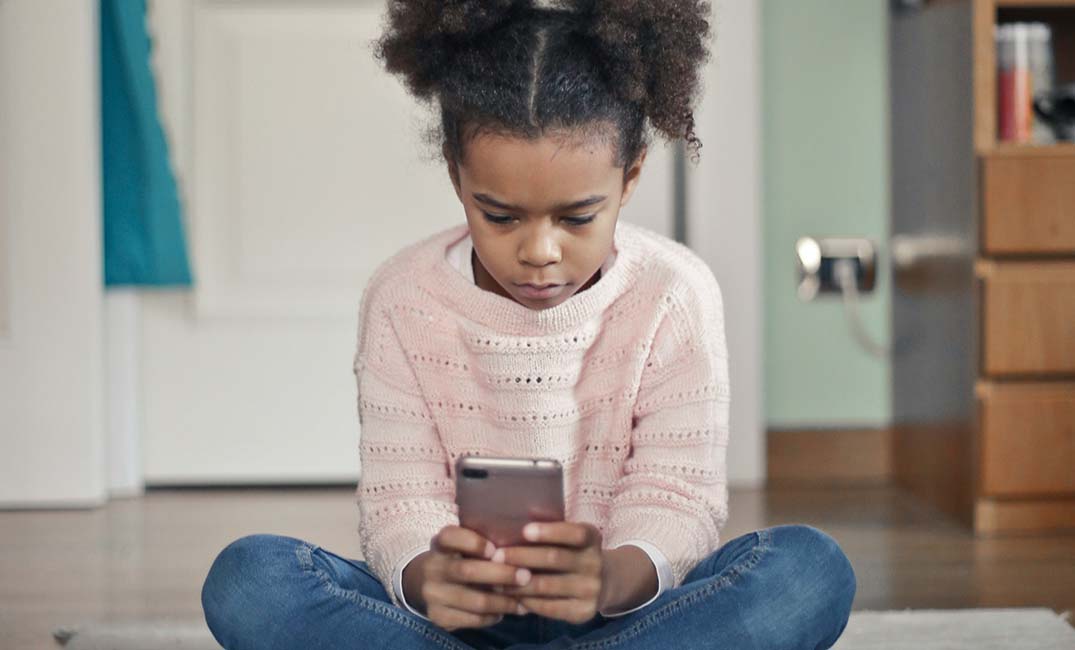
The European Commission (EC) has come a step closer to implementing a social media ban for children.
Yesterday, the commission received a commissioned report from the Special Panel on Child Safety Online, detailing the effect of social media on children and recommending limited access.
Ursula von der Leyen, president of the EC, explains that panel examined how to protect our kids online, and how to establish a new norm in the future online world.
“We in Europe believe that parents bring up our kids, and not predatory algorithms. To that end, let me be very clear: social media is not a toy,” she says.
“While ultimately it is up to parents to decide when children get their first smartphones, what we already have is a consensus that there needs to be a start date for the age children can join social media.
“The status quo, a world where we continue to allow big tech unrestricted access to our children, will only consign another generation to more mental harm, addiction and misery,” she adds.
The data show that, across Europe, young people now spend four to six hours per day on screens. At the same time, across Europe, almost 60% of young children have experienced emotional or psychosocial problems online.
“And day and night, parents too well see the consequences of this: loss of sleep, depression, anxiety, cyberbullying, exposure to harmful content,” Von der Layden adds. “All this is happening while our children’s brains are still developing. We cannot expect children to succeed in a system that was never designed with their wellbeing in mind, when they are most vulnerable.”
She says the platforms are the architects of these systems. “Now they must prove that their services do no harm. In Europe, whoever develops a product is responsible for its safety. This is why we have the Digital Services Act so that providers remove harmful features – addictive algorithms, dark patterns, harmful content, or unwanted contacts.
“With our DSA, we have already taken strong action – against TikTok’s addictive design, and just last week against Meta. Because the rule in Europe is safety-by-design. The platforms have a duty of care to their users, especially to their most vulnerable users.
“So when a young person reports a problem, providers must respond quickly and effectively. Children’s rights must be taken seriously. And companies must be held accountable. So we will continue to uphold our legislation and enforce our rules and change the system where it fails our children.”
Von der Leyden adds that there should be age-appropriate restrictions to platforms. “This is not about whether children can access social media. It is about whether and when social media can access our children.
“The question is no longer if children face risks online, but what can we do to give children a safer start online.
“And here, our age verification app is one of the tools to get it done. It is easy to use, privacy preserving, and open source. This is about putting power back into the hands of parents.”
Von der Leyden adds that the argument for a social media start date is getting stronger. “We need to set the age at which children can legally access social media.
“When it comes to social media, the research shows that timing matters. For example, we know that toddlers should have no exposure to screens and digital platforms at all. So no screens under the age of three. Children should only be exposed to social media under supervision, and time-limited.”
She adds that evidence point to social media platforms as being the most harmful to children – but there are also other providers with age-inappropriate and addictive features.
“So think of it as social media plus. And when we have this clearly defined category, I believe we need to consider phased and gradual access for different age ranges.”
The Special Panel Child Safety Online report can be downloaded here: https://commission.europa.eu/document/download/d833504d-5ec3-4fac-945f-38e7d0bd5326_en?filename=Special-panel-report.pdf