
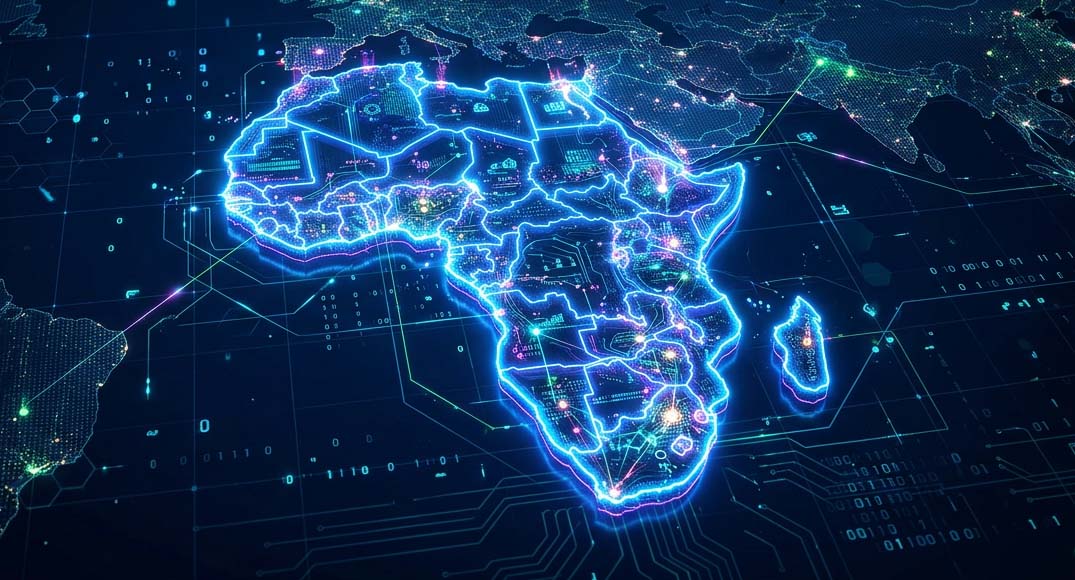
Africa’s AI choices are becoming geopolitical choices.
As the US and China accelerate the development of increasingly distinct and incompatible AI technology stacks, African governments and companies can move quickly to avoid long-term dependency, technology lock-in, and exposure to geopolitical volatility, according to a new report by BCG Institute, “The Great Divide: How the US and China Are Splitting the AI World.”
The report finds that the global AI race is no longer only about who builds the most powerful models. It is increasingly about who controls the full AI stack – from chips and cloud infrastructure to foundation models, applications, data governance, and security protocols.
While the US continues to lead through capital deployment, frontier models, talent, and compute infrastructure, China is advancing a sharply different model built around cost-optimised AI, domestic adoption, open-weight models, and growing self-reliance across the value chain.
For Africa, this divide is not theoretical. AI will increasingly underpin public-service delivery, industrial productivity, financial inclusion, health systems, education, logistics, and national competitiveness. The question facing African leaders is therefore not simply how fast to adopt AI, but which AI ecosystem to build on – and how to keep strategic flexibility as the world fragments.
“With the AI race between the US and China entering a new phase, stack choice will increasingly determine where a company can operate and its exposure to geopolitical volatility,” says Nikolaus Lang, global leader of the BCG Institute and a co-author of the report. “Organisations that act now, while flexibility still exists, will be best placed to navigate what comes next.”
The BCG Institute analysis shows that the US has maintained its lead in AI supply, supported by its strength in capital deployment and talent. Since 2023, US-based startups have raised around $380 billion in AI-related venture capital, while US technology giants invested more than $300-billion in R&D in 2024 alone.
A sizeable part of those funds is invested in AI and adjacent innovations. CAPEX by top US technology companies surpassed $400-billion in 2025, compared with $63-billion in China, and is estimated to exceed $800 billion in 2026.
China, by contrast, is building a different proposition – one that may prove particularly relevant for emerging markets.
The report highlights China’s progress in developing powerful, cost-optimised models, supported by open-weight ecosystems and domestic chip development. It also notes that China’s close trade and investment relationships with the Global South could strengthen its ability to export AI stacks.
China is now the primary trading partner of 78 countries in the Global South and has built, financed, or operated more than one-third of Africa’s commercial ports through its infrastructure investments.
This creates a new strategic dilemma for Africa. US-led AI stacks may offer access to frontier capabilities, mature cloud infrastructure, and global enterprise-grade tools. Chinese AI stacks may offer lower costs, faster deployment, and stronger alignment with existing infrastructure relationships in some markets. But either path can create long-term dependencies if adopted without a clear architecture strategy.
“For South African businesses, navigating this divide comes down to a pragmatic mix of economics and risk management,” says Dawie Scholtz, MD and partner at BCG, Johannesburg. “Right now, the Chinese AI stack offers a compelling economic proposition – with some models delivering 80% to 90% of the performance at roughly 10% of the cost of US alternatives.
However, leaders must recognise that mixing and matching across the two ecosystems will likely become increasingly difficult as geopolitical competition over AI intensifies. Choosing a model may eventually mean choosing the full AI stack.
Beyond the bottom line, this is a critical decision on geopolitical risk. With the US and China weighing stricter controls on advanced models, South African companies must evaluate their long-term exposure to being cut off from critical tools. This requires careful alignment, particularly for entities with global subsidiaries where regulatory and technology preferences will inevitably differ across jurisdictions.”
BCG Institute argues that companies and policymakers should prepare for a world in which AI stack choices increasingly determine where organisations can operate, which regulations they face, how vulnerable they are to export controls, and how easily they can switch technology providers. For African organisations, the risk is not only choosing the “wrong” stack – it is building systems that are too rigid to adapt as geopolitical conditions change.
To build AI resilience, the report identifies three priorities:
- Redundancy: Avoid single points of failure by maintaining fallback options across critical layers such as models, cloud infrastructure, and compute access.
- Modularity: Design AI systems so that one layer can be replaced without rebuilding the entire architecture.
- Heterogeneity: Combine different providers, model types, and deployment options to avoid overexposure to one geopolitical ecosystem.
For African companies, the implications are immediate. CEOs and technology leaders should map their exposure across the AI stack, assess where geopolitical or regulatory disruption could affect critical workflows, and ensure that AI partnerships are evaluated not only on performance and cost, but also on resilience, portability, and long-term strategic control.
For African governments, these principles extend beyond business strategy, pointing to a need to strengthen national AI strategies, invest in sovereign data and cloud capabilities where relevant, develop procurement rules that preserve interoperability, and ensure that AI adoption supports local economic priorities rather than creating external dependencies that are difficult to reverse.
“AI is becoming strategic infrastructure. For African economies, the priority is not to pick a side too early, but to build resilience by design,” says Hamid Maher, MD and senior partner, head of BCG Casablanca and BCG X Africa. “The winners will be the countries and companies that preserve optionality, combining affordability, interoperability, data sovereignty, and security. In a bifurcating AI world, resilience will matter as much as speed.”