
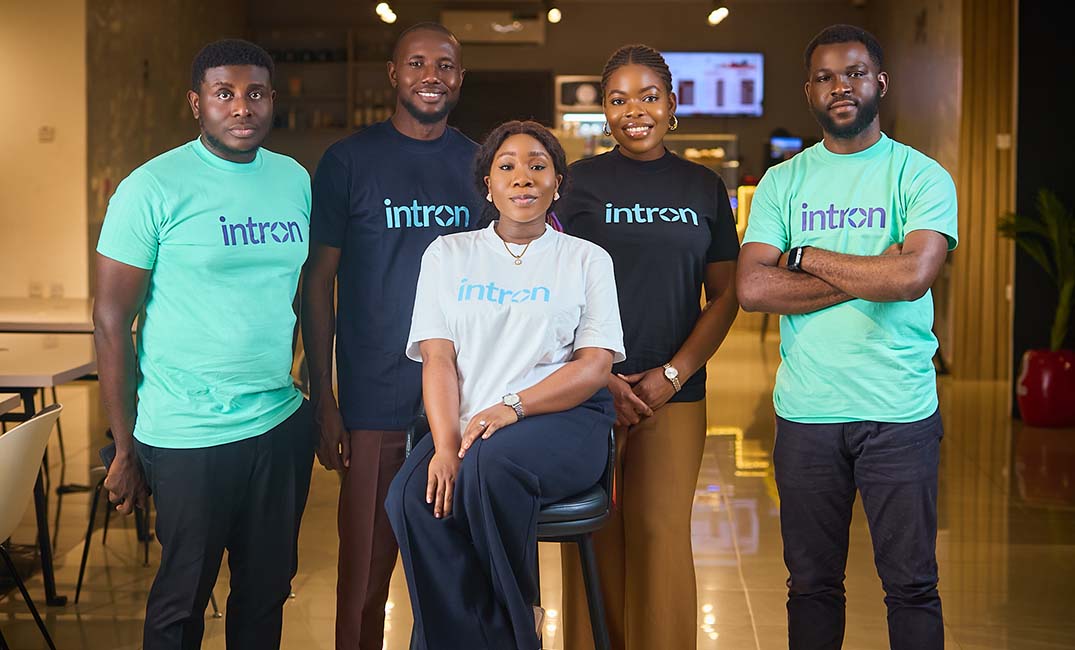
Intron, an Africa-centric voice technology platform, has launched Sahara v2.5, African voice AI that enables computers to understand one of the continent’s most common ways of communicating: mixing languages within the same sentence and conversation.
Across Africa, people often move between languages in everyday conversations. A doctor may explain a diagnosis in English before reassuring a patient in Swahili. A bank customer might discuss a loan in Yoruba before finishing the sentence in English or Nigerian Pidgin. Friends, families and colleagues effortlessly blend languages to express identity, nuance and context. Many AI systems struggle to follow these conversations, dropping critical segments, and often forcing people to choose a single language or repeat themselves. Sahara v2.5 addresses this gap.
The new release introduces bilingual language mixing (code-switching) speech recognition to 12 African languages, including Zulu, Hausa, Swahili, and Luganda.
Intron also introduces the world’s first African trilingual speech-recognition model that supports switching between Kinyarwanda, English and French, using proprietary algorithms and technology for which the company has filed US patents.
Intron adds fluent text-to-speech and voice-agent capabilities with language-mixing across the 13 languages outperforming ElevenLabs and Gemini in 11 of 13 languages tested, enabling businesses to build voice experiences, voice bots, and voice agents that sound natural to local users.
New speech-recognition support for Nupe, Kanuri, Nigerian Fulfulde, Tigrinya, Kikuyu, Dholuo, and Somali expands Sahara’s African-language coverage to 31 languages, making it one of the continent’s most comprehensive voice AI platforms.
At the 2026 Deep Learning Indaba in Lagos, Africa’s largest AI gathering, the Sahara CodeSwitch Hackathon brought together over 120 teams from 21 countries to build fintech, healthtech, agritech, and edutech apps that support language-mixing on Sahara. Several teams compared Sahara with several open, closed, and commercial models, including Gemini, AssemblyAI, and Whisper; the results indicated that Sahara performed significantly better even though it was slightly slower.
The competition continues through September, with a dedicated Masterclass hosted by Nvidia on August 28th. Registration remains open, with teams competing for the $10 000 prize pool.
For enterprises, Sahara v2.5 will reduce the need for customers to change how they speak to be understood. Contact centres, hospitals, financial institutions, governments and WhatsApp voice assistants can now follow conversations as they naturally move between local languages and English/French, making voice AI more accurate, more inclusive and ultimately more useful for the people it serves.
With offline models deployed on Nvidia hardware at PAMO Clinics in Port Harcourt, Nigeria, through a global donor-funded project, Intron brings private and sovereign AI closer to enterprises, governments, and institutions where regulatory or connectivity constraints limit access to best-in-class technology.
Sahara v2.5 also introduces new streaming speech-recognition and text-to-speech capabilities to the API supporting live captions, real-time applications and real-time speech generation. Several Improvements to latency, concurrency and reliability support high-volume applications across chatbots, contact centres, medical documentation, financial services, legal workflows, and agricultural or climate advisory services.
Sahara already supports organisations across healthcare, legal, financial services and contact centres. Existing deployments include:
- Branch Intl (Financial services) – Sahara-powered Branch collections agents recovered more than ₦1,2-million in delinquent loans in one week, with record after-hours and weekend repayments, outperforming human agents on delinquent loans over 356 days.
- Audere Africa (Voice Chat) – Youths across South Africa can now speak naturally with Audere’s Self-Cav Reproductive Health WhatsApp chatbot using voice to express themselves freely instead of being confined to text chat. In field testing with South African English accents, Audere found Zulu code-switching to be the leading transcription error source and are excited to see Intron bring code-switching support to Zulu and Afrikaans.
- Ogun State Judiciary (Legal) – The Ogun State Judiciary has worked with Intron for over a year, expanding from an initial pilot court to nine courts, with plans to automate transcription across all 18 high courts in the state. Proceedings that previously took more than four hours now finish in half the time, allowing judges to follow courtroom dialogue without repeatedly stopping to write notes.
- Health – A 14-minute Swahili-English doctor-patient consultation in Nairobi is converted into a structured clinical note in less than 30 seconds, taking the documentation burden off overworked physicians so they can focus more on patient care.
Sahara supports production and research deployments for over 40 enterprise customers across 6 countries, including Nigeria, Kenya, South Africa, Uganda, Rwanda and Ghana.
Intron has published benchmark results comparing Sahara with global models on African code-switched speech. Measured by word error rate, where a lower score means fewer errors, Sahara v2.5 achieved an average WER of 34.3% across 12 languages, compared with 53,8% for Gemini 3.6—a 36% relative reduction in errors, or an average of 19.5 percentage points per language, demonstrating a substantial and consistent advantage over global models on African code-switched speech. Separate benchmarking conducted through Gooey.ai for the Gates Foundation and CLEAR Global found Sahara performed better on five of seven Nigerian languages evaluated, including against Gemini and Meta’s Omnilingual model.
“Code-switching was one of the biggest problems that consistently came up for clients deploying real-world voice AI. The content loss with most models increases post-editing time, and propagates errors and omissions to downstream summaries, call logs, court records, and clinical notes,” said Tobi Olatunji, CEO of Intron.
“Africa needs AI built for how Africans really speak. People should not have to translate themselves for a machine, flatten their accent, avoid local expressions or repeat only the English part of what they said. Voice AI should work with the way people already speak.”
Along with the launch of Sahara v2.5, Intron has published its 2026 Africa Voice AI Report. The report challenges the assumption that collecting African language data is the only barrier to reliable voice AI, arguing that research capacity, orchestration, and implementation expertise weigh as heavily as hours of audio. Ambient medical scribes make the case– although widely adopted across the US and Europe, they have struggled in African clinics where consultations move between languages.
The reports is available here.