
A new major global review shows that platforms such as Facebook, Instagram, TikTok and YouTube are fueling a fast-growing and difficult-to-track illegal wildlife trade.
The University of Cape Town’s (UCT) Dr Annette Hübschle, a co-author of the study, says closing platform loopholes and strengthening enforcement would not be enough on their own. Durable solutions must put local communities at the centre and treat online wildlife trafficking as a whole-of-society challenge.
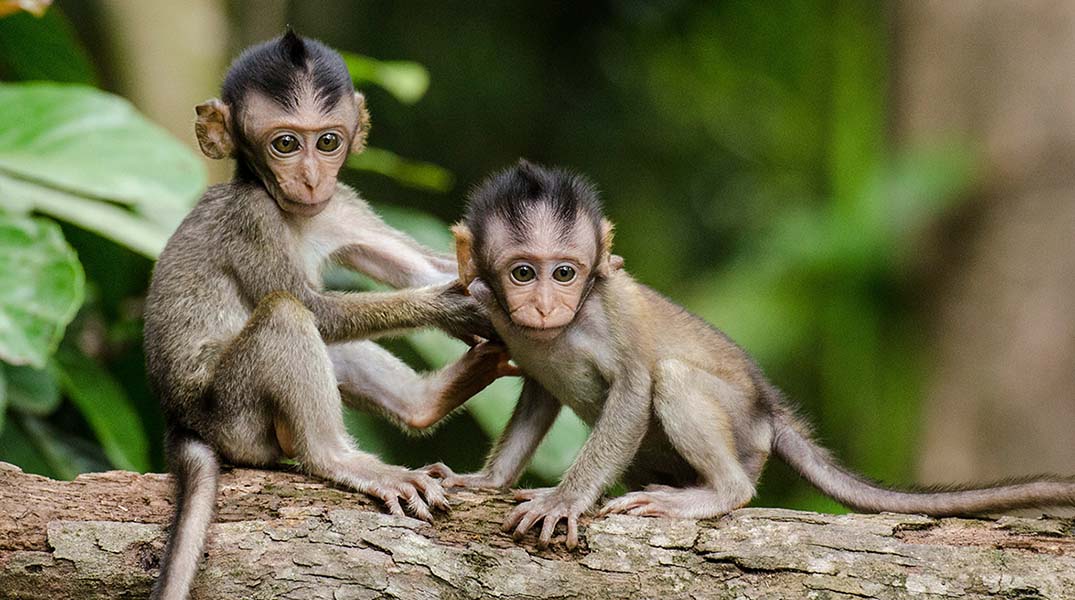
A team of researchers monitoring online activity for six weeks in mid-2025 found more than 1 600 primates advertised for sale across Facebook, Instagram, TikTok and YouTube. Birds, snakes, frogs, orchids and many other species are increasingly traded in the same way.
The new study – published in Nature Reviews Biodiversity – shows that thousands of animal, plant and fungal species including many already threatened with extinction and some not previously identified as at risk, are being drawn into an increasingly sophisticated online marketplace as global demand grows.
Dr Hübschle, chief research officer and co-lead of the Global Risk Governance Programme in UCT’s Faculty of Law, is the study’s social scientist and its only Africa-based co-author. Her contribution brings a Global South and community-centred perspective to a field that has largely focused on detection technologies, enforcement, and platform policy.
“The online illegal wildlife trade is not simply a technology problem that can be engineered away,” says Dr Hübschle. “It spreads across platforms faster than any single company or country can police it – and it represents a growing, evolving threat to biodiversity. Tackling it requires strategies that strengthen species protection and regulatory capacity but, just as importantly, that engage local communities meaningfully and treat this as a whole-of-society responsibility.”
The review found that online trade spans multiple points in the trafficking chain – from harvesters and intermediaries locating specimens, through social media to direct-to-consumer shipments that bypass large-scale smuggling networks altogether.
Africa features prominently in the trade routes documented by the study.
Between 2010 and 2021, roughly 800 000 African grey parrots were traded internationally. Researchers monitoring public Facebook accounts of exporters in Togo identified more than 200 species advertised for sale, alongside wildlife hosts for viruses of concern to human and animal health.
“Much of the current response is enforcement-heavy and modelled on Global North regulatory systems,” adds Dr Hübschle. “But communities, local practitioners, and frontline conservation actors are often the first to notice emerging code words, shifting routes, and the unintended harms of punitive approaches. Their knowledge should inform prevention, not just be treated as an afterthought once policy is already set.”
For Dr Hübschle, bringing communities into the response is not an abstract policy recommendation. It is grounded in her own research.
The review’s call to centre communities draws directly on Dr Hübschle’s own scholarship: the study cites her 2025 chapter, “Wildlife harmscapes and whole-of-society responses: Beyond criminalisation towards inclusive conservation,” in the in the Routledge Handbook of Wildlife Crime, which extends the harmscapes framework, which was developed by the Global Risk Governance Programme at UCT, which Dr Hübschle co-directs.
Harmscapes treats wildlife harm as something produced across diffuse, interconnected sites rather than a series of discrete crimes to be policed and asks who is positioned to act at each of those sites – including actors state-led responses typically overlook.
Dr Hübschle points to her fieldwork in South Africa’s Succulent Karoo as a concrete illustration.
The review notes that ornamental plants, including orchids and cacti, are heavily represented in online illegal wildlife trade. Dr Hübschle’s fieldwork across the Northern and Western Cape, as part of the Safeguarding Succulents project, has tracked a related dynamic on the ground.
The illegal price of Conophytum, a succulent genus targeted by international collectors since 2019, has collapsed by up to two orders of magnitude over three years as the number of harvesters has grown and they have oversupplied the market. Rather than ending the problem, the price collapse is pushing harvesting towards other plant genera and reptiles.
“On the ground, we’re seeing communities read these shifts in realtime and, in some cases, propose their own solutions including access-and-benefit-sharing models, before formal policy catches up,” says Dr Hübschle. “That local knowledge is exactly what a whole-of-society response needs to draw on – whether the trade is happening in a Cape Town Facebook group or a Succulent Karoo veld.”
Dr Neil D’Cruze, a co-author from Manchester Metropolitan University, notes that the harms mirror those of traditional wildlife trafficking, but can unfold at greater speed and scale.
“Online illegal wildlife trade operates through complex, dispersed networks that cross national borders, expanding – and in some cases replacing – traditional trafficking routes,” he says.
The authors set out five complementary strategies for addressing the problem: AI-assisted monitoring and detection; stronger platform policies and content moderation, backed by independent audits; whole-of-society coordination among technology companies, regulators, NGOs and affected communities; demand-reduction campaigns informed by behavioural science; and international policy frameworks such as CITES and the EU’s Digital Services Act.
Lead author from the University of Helsinki, Professor Enrico Di Minin says: “Addressing online illegal wildlife trade is complex, but not insurmountable. It requires cooperation across sectors and comprehensive policy frameworks that recognise the online dimensions of wildlife trafficking.”
The researchers argue that technology and enforcement must therefore form part of a broader response, rather than become the response.
The study also identifies major gaps in the evidence base – particularly around how online trade routes are documented in the Global South. It calls for research that better reflects the regions most affected by wildlife trafficking and its downstream consequences for biodiversity, conservation, and public health.
For Dr Hübschle, the message is clear: stopping illegal wildlife trade online will require more than taking down posts, closing accounts, or strengthening enforcement. The people who live alongside the species being targeted must have a meaningful role in understanding the trade, shaping interventions, and developing solutions.
As wildlife trafficking increasingly moves into digital spaces, the study argues that the response must keep pace – from platforms and policymakers, to communities on the ground.