
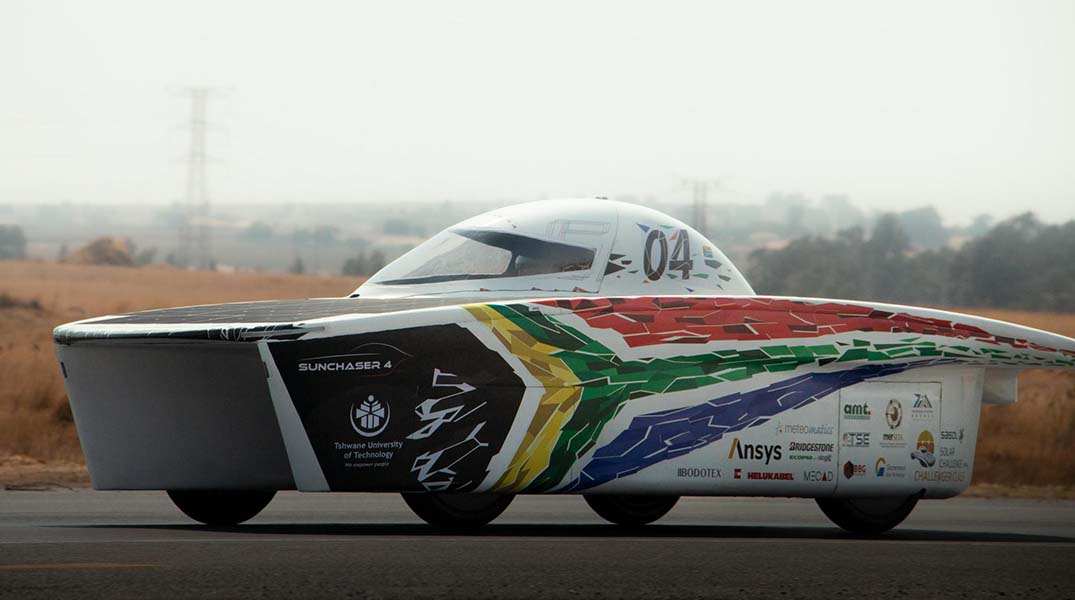
Ford Motor Company of Southern Africa will sponsor the Tshwane University of Technology (TUT) SunChaser IV team in the 2026 Sasol Solar Challenge.
On 10 September, TUT’s student-built solar car will cross the start line in Sasolburg, beginning an eight-day public-road challenge to Cape Town, travelling through the Western Cape and along the West Coast.
Predominantly designed and built by TUT students, with input and support from university staff and industry experts, the solar car will have to prove itself beyond the workshop and on the open road.
Ford’s high-tech engineers will work directly with the TUT team as industrial mentors, sharing hands-on vehicle-building expertise that includes daily preparations, tooling and mechanical advice and mentorship in high-pressure, high-quality environments.
“It’s a direct investment in skills that matter not just for an event like the Sasol Solar Challenge, but for the future of the industry,” says Ockert Berry, vice-president of manufacturing operations at Ford.
“As the automotive industry adapts to the growing need for more sustainable forms of mobility, and as we see an increasing shift to NEV technologies, these kinds of initiatives only become more and more important. That’s especially true for a country like South Africa, which needs future-ready engineering and technical skills if it’s to play an active role in the future of mobility and if we are to protect our future industrial capability by investing in the talent that will take charge after we are gone.”
Johannes de Vries, solar car team manager at TUT, adds: “Having worked on previous SunChaser models, I believe this group of students has produced something all South Africans can be proud of. Their determination and resourcefulness have been evident through every step of the journey, and it’s a reminder of what young talent can achieve when we invest in it.”
TUT’s SunChaser vehicles have a track record: previous models have picked up awards on the international stage. Designing and assembling the 2026 car has pushed the team to achieve similarly high standards. The build process also demands the same qualities Ford demands of its own engineers: technical skill, resourcefulness, and the ability to solve problems under pressure.
“Beyond those skills, South African grit and determination will be vital for getting this team over the line,” says Berry. “And this is why we are joining in, to play our part in bringing the industrial mentorship they need but also to use the power of the Blue Oval to get South Africans behind this team and to cheer them over the line, hopefully in first position.”
The tech is more relevant than it looks. Lightweight composite construction, advanced battery management, and solar auxiliary integration – all vital for cars like the SunChaser – are already showing up on production vehicles today.
“This is the talent that takes these early green shoots of innovation and scales them for the future of mobility,” Berry adds.
Now in its ninth edition since launching in 2008, the biennial Sasol Solar Challenge pits teams from South Africa, Switzerland and India against each other on a route from Sasolburg to Cape Town. The winner isn’t the fastest car; it’s the one that covers the most kilometres over eight days, testing design, manufacturing, and strategy in equal measure.