
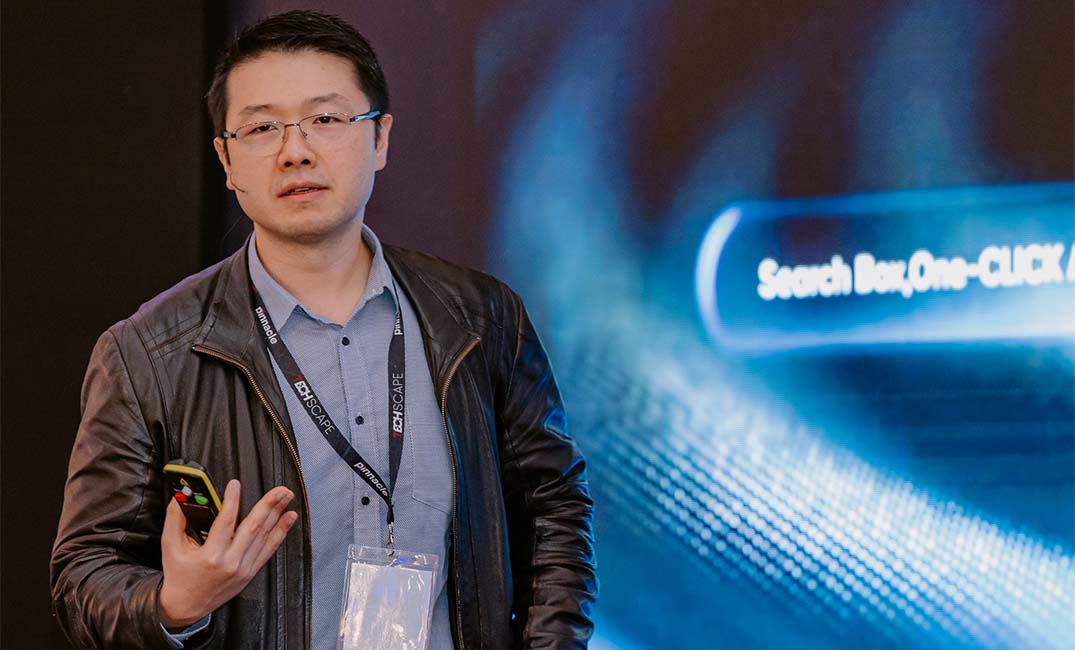
Kathy Gibson reports from Pinnacle TechScape – With the level of hype around artificial intelligence, it can seem like it’s something that landed just in the last couple of years.
But companies like HikVision have been integrating AI into their solutions since at least 2019, enabling automation and intelligence to improve Internet of Things efficacy.
HikVision is probably best known for its security cameras, but the company’s intelligent and integrated offerings go well beyond that, explains Tim Yen, MD of HikVision South Africa
“Most of you probably already interact with our technology without even realising it.”
The change AI has had over the years is in making the technology easier to use and execute upon, he adds.
Today, users interact with an appliance that is easy to use, offers rapid search and fuzzy search, and understands feature-based descriptions.
“Partners can start using these feature to make a surveillance system – which used to be a grudge purchase – into something that offers real value.”
AI integration means users can create new tasks with far less complex setup required. And AI feeds back into the system to improve the context engine and LLMs.
“You can also improve efficiency in terms of false alarms,” Yen says. “Not only are there fewer false alarms, some customers report that they have been cut by over 90%.”
With AI turning security and surveillance into a valuable data resource, Yen says IT partners are increasingly starting to offer these systems. “At the end of the day, cameras are device on the end of a network.”
Not only that, but security and efficiency are improved through the use of multi-disciplinary surveillance using multiple devices.
For instance, Yen explains that radar and PTX cameras can be combined to increase range while bring able to zoom in on incidents.
Or users could combines AI with thermal technology for long range protection, with each rugged camera able to cover as much as 4,5km.
AI also allows cameras to be used in applications like process management performing functions like conveyor belt management.
The more traditional use for cameras, safety operations, is further enhanced through AI, while the data generated is useful for analytics.
HikVision’s Guanlan AI models are built into the edge devices themselves, so processing happens locally.
“We feel we are at the start of a wave in South Africa,” Yen says. “Not only are the systems becoming smarter, but this is effectively an untouched market for us.”
The solutions have multiple uses, and can be deployed in the edge, the core or as a hybrid system.
Partners are key to growing the market, Yen adds. “Partners can use our proven AI and industry expertise to build smarter solutions.
“We offer a complete product and platform portfolio that can address a range of opportunities that include transport, retail, security, manufacturing, perimeter protection and energy.”